Covid-19 Coronavirus Symptoms: Understanding, Recognizing, and Responding Effectively
Understanding the symptoms of the Covid-19 coronavirus is a crucial step in protecting your health and the well-being of those around you. As the virus continues to impact communities globally, recognizing the signs early and responding appropriately can make a significant difference in outcomes. Whether you're a healthcare professional, a business owner, or simply a concerned individual, having clear, accurate, and visually engaging information is essential.
What Are the Common Symptoms of Covid-19?
Covid-19, caused by the SARS-CoV-2 virus, presents with a range of symptoms that can vary from mild to severe. The most commonly reported symptoms include:
- Fever or chills
- Cough
- Shortness of breath or difficulty breathing
- Fatigue
- Muscle or body aches
- Headache
- New loss of taste or smell
- Sore throat
- Congestion or runny nose
- Nausea or vomiting
- Diarrhea
These symptoms may appear 2–14 days after exposure to the virus. It's important to note that some individuals may be asymptomatic, meaning they carry and can spread the virus without showing any symptoms themselves.
Challenges in Recognizing and Communicating Symptoms
One of the biggest challenges in managing the spread of the virus is the variability in symptoms. They can easily be mistaken for allergies, the common cold, or flu. This confusion can delay testing and appropriate precautions. Additionally, public health messaging must be clear, consistent, and accessible to ensure people understand what to look for and how to respond.
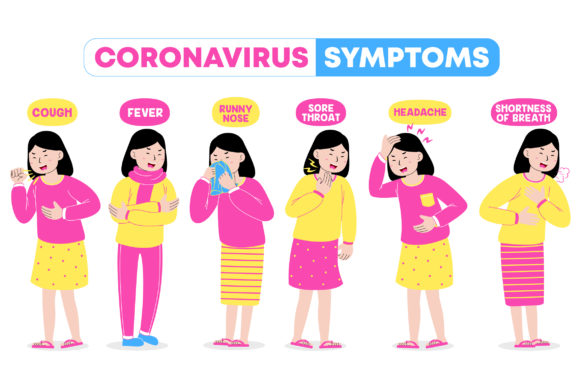
This is where visual communication tools like the Covid-19 Coronavirus Symptoms illustration become invaluable. Designed for clarity and impact, this illustration can be used in posters, infographics, and digital campaigns to help convey essential health information quickly and effectively.
How the Covid-19 Coronavirus Symptoms Illustration Helps
The Covid-19 Coronavirus Symptoms illustration is more than just a visual—it's a practical tool for education and prevention. With its modern design and high-quality visuals, it simplifies complex information into an easy-to-understand format. Whether you're creating awareness materials for a clinic, school, or workplace, this illustration supports your efforts by:
- Clarifying symptoms through visual representation
- Encouraging early detection and testing
- Supporting multilingual outreach by reducing text dependency
- Enhancing engagement through professional, eye-catching design
Practical Applications Across Different Settings
One of the key benefits of the Covid-19 Coronavirus Symptoms illustration is its versatility. Here are some practical applications across various environments:
1. Healthcare Facilities
Hospitals, clinics, and testing centers can use the illustration in waiting areas, patient handouts, and digital signage to inform visitors about what symptoms to monitor and when to seek care.
2. Schools and Universities
Educational institutions can integrate the illustration into posters and online portals to guide students and staff on self-assessment and reporting procedures.
3. Workplaces
Businesses can use the illustration as part of their health and safety communications, helping employees understand when to stay home and when it's safe to return to work.
4. Public Health Campaigns
Government agencies and NGOs can deploy the illustration in multilingual campaigns to reach diverse populations with consistent, easy-to-understand messaging.
Designing for Impact: Recommendations and Considerations
When using the Covid-19 Coronavirus Symptoms illustration, it's important to consider the context and audience. Here are a few tips to maximize its effectiveness:
- Pair with clear instructions: Always include actionable steps like when to isolate, how to get tested, and where to find help.
- Use in multiple formats: The illustration is available in AI, EPS, JPG, and PNG formats, making it ideal for both print and digital use.
- Customize for your audience: Thanks to its vector format, you can easily edit and adapt the design to suit different languages, branding, or regional guidelines.
- Ensure accessibility: When designing posters or infographics, make sure the layout is readable for people with visual impairments or color blindness.
Adapting to Different User Needs
Different users will approach the Covid-19 Coronavirus Symptoms illustration in different ways. For example:
- Graphic designers may appreciate the flexibility of vector files for creating custom infographics.
- Public health officials may focus on clarity and consistency in messaging across materials.
- Small business owners may look for ready-to-print templates that they can use immediately without design expertise.
Understanding your audience and their needs ensures that the illustration is not just seen—but understood and acted upon.
Conclusion: Turning Knowledge into Action
Recognizing the Covid-19 coronavirus symptoms is the first step in preventing its spread and protecting public health. But knowledge alone isn't enough—it needs to be communicated clearly, consistently, and effectively. Whether you're designing a poster for a clinic wall or an infographic for social media, using a high-quality, professionally designed illustration can make all the difference.
The Covid-19 Coronavirus Symptoms illustration is a powerful resource that supports your efforts to inform, educate, and protect. With its modern design, ease of customization, and adaptability across platforms, it's a smart investment for anyone committed to making health communication more accessible and impactful.